Blown-in insulation and fiberglass batts are two of the most common types of insulation used in residential and commercial buildings in NEPA.
Each type of insulation offers a comparable R-value (thermal resistance), but each is better suited to different installations.
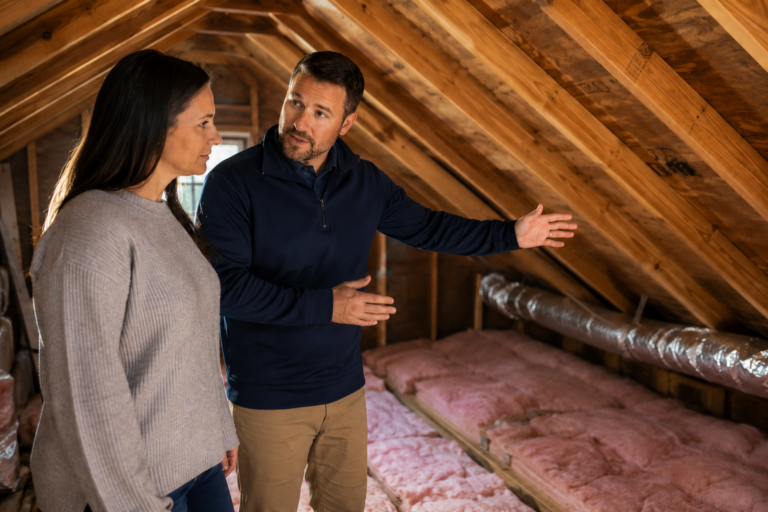
Blown-in or loose-fill insulation can be installed behind existing walls and in hard-to-reach ceiling cavities using a special blower machine. Blown-in insulation is typically made of fiberglass or cellulose. Blown-in insulation is a great choice for existing homes that are completely finished.
Fiberglass batts are typically installed in snug wall cavities and between rafters, making them an excellent choice for unfinished basements and attics, as well as retrofit projects.
Costs and installation difficulty vary between the two forms of insulation, and both may be susceptible to different environmental hazards, including pests, moisture, and mold.
This guide will discuss the pros and cons of blown-in insulation and fiberglass batts to help you decide which is best.

What Is Fiberglass Batt Insulation?
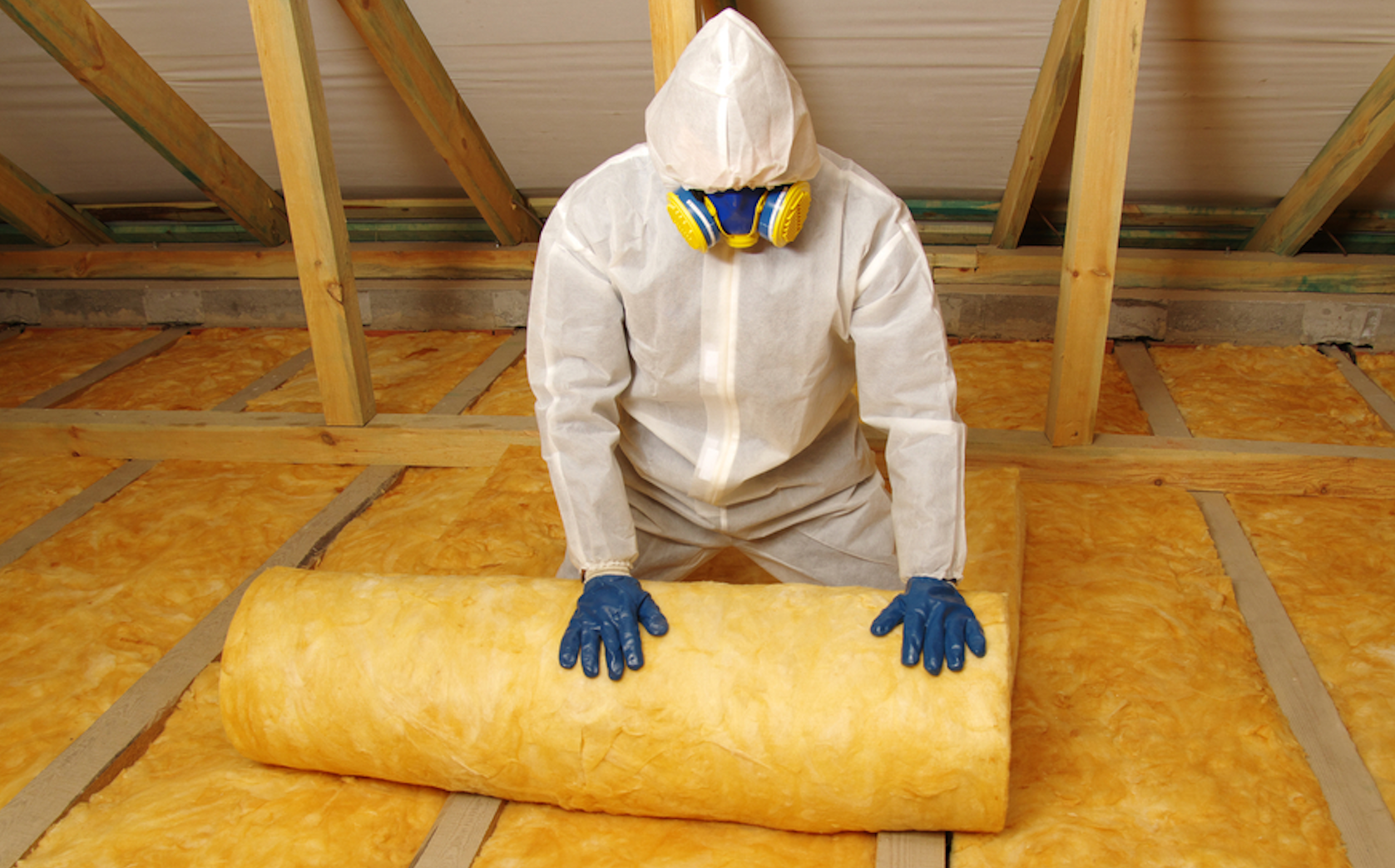
Fiberglass batt insulation is one of the most common types of DIY-friendly insulation. Prepared in pre-cut batts or rolls, this type of insulation can be installed between wall cavities, floor joists, and rafters to resist air flow between different areas of your home.
Fiberglass batts are made of fiberglass, mineral wool, or cotton and typically have an R-value range of R-2.9 to R-3.8 per inch. Batt insulation is rated to last anywhere from 10-25 years, depending on environmental conditions.
Pros of Batt Insulation
- Easy to Install – Batt insulation is designed for simple installation, making it a great option for DIY projects.
- Cost-Effective – Generally, batt insulation is more affordable than blown-in insulation.
- Readily Available – Available at most home improvement stores, batts are a common material you can find in a pinch.
- No Special Equipment Required – Unlike blown-in insulation, batts don’t require specialized equipment for installation and can be installed with simple tools.
Cons of Batt Insulation
- Requires Precision for Proper Fit – Gaps, compressions, and improper installation can reduce its effectiveness and lead to air leaks.
- Less Effective at Filling Gaps and Cracks – Batt insulation is more difficult to cut to shape and may not be suitable for round or oblong spaces.
- More Prone to Moisture and Mold – Contact with water or excess humidity can lead to mold and degrade the integrity of batts, leading to premature replacement.
What Is Blown-In Insulation?
Blown-in insulation, also known as loose-fill insulation, consists of tiny particles of fiberglass, cellulose, or mineral wool blown into wall cavities and rafters with a specialized device. This type of insulation is commonly used in attics, wall cavities, and other hard-to-reach spaces.
Blown-in fiberglass typically sits at an R-value range of R-2.2 to R-2.9 and can be a cost-effective way to insulate behind new or existing walls.
Cellulose is an eco-friendly alternative to blown-in fiberglass made of recycled newspaper and natural materials. Cellulose is treated with fire-retardant chemicals to prevent flammability and typically has an R-value of R-3.1 to R-3.8.
Blown-in insulation can last 10-20 years but may settle, slowly reducing its effectiveness.
Pros of Blown-In Insulation
- Superior Coverage – Blown-in insulation fills in gaps, cracks, and irregularly shaped areas more effectively than batts.
- Higher Energy Efficiency – Because it creates a tighter seal, blown-in insulation can provide better thermal performance.
- Good for Retrofit Projects – Ideal for adding insulation behind existing walls without major renovations.
- Better for Soundproofing – The dense coverage of blown-in insulation can help reduce noise transmission.
Cons of Blown-In Insulation
- Requires Professional Installation – Special equipment is needed, making it more difficult to install DIY.
- Higher Initial Cost – The upfront cost of materials and professional labor can be higher than batt insulation.
- Settling Over Time – Some types of blown-in insulation, particularly cellulose, may settle over time, potentially reducing effectiveness.
Comparing Batts vs. Blown-In Insulation
Many factors can impact your decision when deciding between batts and blown-in insulation. Here are the top four.
1. Installation
Regarding installation difficulty, batt insulation is the easiest to install and doesn’t require any special tools. With that said, batts can be labor-intensive, especially in hot attics or basements, so professional assistance is always recommended.
Blown-in fiberglass or cellulose requires a blower machine, which may be available for rent at some hardware stores. However, it should really be left to a professional.
2. Cost
Batts and blown-in insulation are considered more affordable alternatives to spray foam insulation, but cost is typically an indicator of efficiency in the insulation industry.
Generally, batt insulation is considered more affordable depending on whether you choose to DIY it, and there are different sizes and R-values to choose from that will impact pricing.
Calculating costs for blown-in insulation depends on the type of material, the size of the insulated area, and your individual contractor’s rates.
3. Energy Efficiency
The two offer thermal resistance that is generally comparable, though fiberglass batts are considered slightly better in this department. However, blown-in insulation offers more uniform coverage and prevents air leaks, which can actually deliver more savings over time. Therefore, the efficiency of each material depends on how it is installed.
4. Moisture Resistance
Batts are technically rated to last longer, though they are often more prone to moisture. If you install batts in an attic or space with poor ventilation, adding more vents or choosing a better material that can resist moisture might be ideal.
One such material is cellulose, which can absorb moisture and generally resist mold growth or degradation. Nevertheless, all forms of blown-in insulation are prone to settling, which can impact efficiency over time.
5. Best Applications
Finally, batt and blown-in insulation are better suited for different applications. For example, batts are easy to install in new or unfinished portions of your home, such as attics, basement walls, and rim joists.
On the other hand, blown-in insulation is a better option for retrofitted projects that need to access behind existing walls.
Insulation R-Value: Comparing Blown-In Insulation vs. Batts
R-value measures how well insulation resists heat flow: the higher the number, the better the material performs. Both batt and blown-in insulation can help NEPA homes reach the recommended R-49 attic rating, but the quality of installation often matters more than the material itself.
Fiberglass batts and blown-in insulation offer comparable values that reach the recommended R-value for your home with proper installation. However, you may be paying more for lower-quality materials that require more to meet these demands.
R-Value Comparison: Batt vs. Blown-In Insulation
Insulation Type | Typical R-Value per Inch | Notes |
Fiberglass Batts | R-2.9 to R-3.8 | Performs well when properly fitted; gaps or compression reduce effectiveness. |
Blown-In Fiberglass | R-2.2 to R-2.9 | Good coverage; lower R-value per inch but excellent at reducing air leakage. |
Blown-In Cellulose | R-3.1 to R-3.8 | Highest R-value among common loose-fill options; great for dense-pack walls and attics. |
Because each material has different depth requirements to achieve an attic R-49, your insulation contractor will calculate the correct installed thickness based on manufacturer specifications and settling factors.
Which Insulation Performs Best in NEPA Homes?
Homes in Scranton, Wilkes-Barre, Hazleton, and across the Poconos tend to share similar challenges: older framing, limited air sealing, inconsistent insulation depth, and high moisture exposure. Because of these regional factors, some insulation types perform measurably better than others.
1. Blown-In Cellulose: Best for Energy Efficiency & Air Sealing
Cellulose consistently ranks as one of the highest-performing materials in cold climates like NEPA because:
- Its dense composition slows air movement, reducing drafts and heat loss.
- It naturally resists moisture better than fiberglass because it can absorb and release humidity without losing performance.
- It fills irregular cavities and penetrations found in older homes far better than batts.
- When installed at proper density, cellulose provides excellent R-value consistency across the entire attic.
For drafty, older, or previously under-insulated homes, cellulose often yields the largest immediate drop in heating bills.
2. Blown-In Fiberglass: Best for Attics Needing Full Coverage
Blown-in fiberglass is an excellent choice for NEPA homes with large attics that require uniform coverage. It spreads evenly across the attic floor, creating a consistent thermal blanket that outperforms batt insulation in most older homes.
Homeowners often prefer blown-in fiberglass because it’s cleaner to install, doesn’t settle as heavily as cellulose, and remains lightweight—an advantage in attics with older or delicate framing.
This material performs best in homes with good ventilation and moderate moisture levels. While it doesn’t provide the same air-sealing benefits as cellulose, pairing blown-in fiberglass with professional attic air sealing dramatically improves performance.
When installed together, blown-in fiberglass can match or even exceed the efficiency of traditional batt insulation, making it a smart choice for attics where coverage and consistency matter most.
3. Fiberglass Batts: Best for Open Framing & Budget Projects
Fiberglass batts are the most practical choice when walls or ceilings are fully accessible during renovation, making them ideal for rim joists, new construction, and unfinished basements. They’re also the most budget-friendly insulation option, which is why many homeowners choose batts for straightforward, open-framing projects.
Older NEPA homes often present challenges such as uneven stud spacing, warped framing, and irregular cavities, which may make fiberglass batts difficult to install or impractical. For this reason, batts perform best in homes with clean, uniform framing—while draftier, older houses typically benefit more from blown-in materials that can fill every void.
Which Insulation Is Right for Me?
Blown-in insulation and fiberglass batts are both fine choices for whatever insulation project you need in your home. Batts are typically preferable for individuals on a budget who want to DIY their insulation.
Nevertheless, we caution people against tackling basement and attic projects independently, as achieving the proper balance between ventilation and insulation is important. Furthermore, air leaks due to improper insulation can quickly derail your project.
On the other hand, blown-in insulation is affordable and uniform, preventing air leaks. While settling may impact performance over time, blown-in insulation is one of the only options available–other than spray foam–to insulate behind existing walls and ceilings.
No matter what type of insulation you choose, partner with the right contractor to ensure the job is done right. EnergySmart has decades of combined experience handling all types of insulation projects and materials, ensuring your home achieves maximum comfort and savings during the cold winter.
FAQs
Can I add blown-in insulation over existing batt insulation?
Yes, in most cases, you can add blown-in insulation over existing batts to improve energy efficiency. However, ensure the existing insulation is dry and in good condition before adding more.
Which insulation type is better for soundproofing?
Blown-in insulation generally provides better soundproofing because it fills gaps and creates a denser barrier against noise transmission.
How long does each type of insulation last?
Both batt and blown-in insulation can last 20-30 years or more with proper installation and maintenance. However, factors like moisture exposure and settling can affect longevity.
Does blown-in insulation settle over time?
Yes, cellulose blown-in insulation settles slightly over time, which can reduce its R-value if improperly installed. Professional installers account for this by adding the correct initial density.
Is batt insulation ever the better choice?
Batt insulation is a good fit for open wall cavities, new construction, or easy-access areas where fast installation is a priority. It’s also preferred when homeowners want the lowest upfront cost.
Can insulation help reduce heating and cooling bills?
Absolutely. Proper insulation can reduce energy bills by 10–50% depending on the home’s condition, climate, and the insulation type used.
Is blown-in insulation safe for people with allergies?
Yes. Modern cellulose and fiberglass blown-in insulation are treated to resist mold and pests and are generally considered safe. Fiberglass may cause minor irritation during installation but is safe once sealed in place.
Do I need to remove old insulation before installing new insulation?
Not always. Old insulation can remain if it’s dry, clean, and free of mold or rodent contamination. If damaged, removal is recommended to prevent odors, allergens, and moisture problems.